Facebook
 X
 Pinterest
 Copy Link
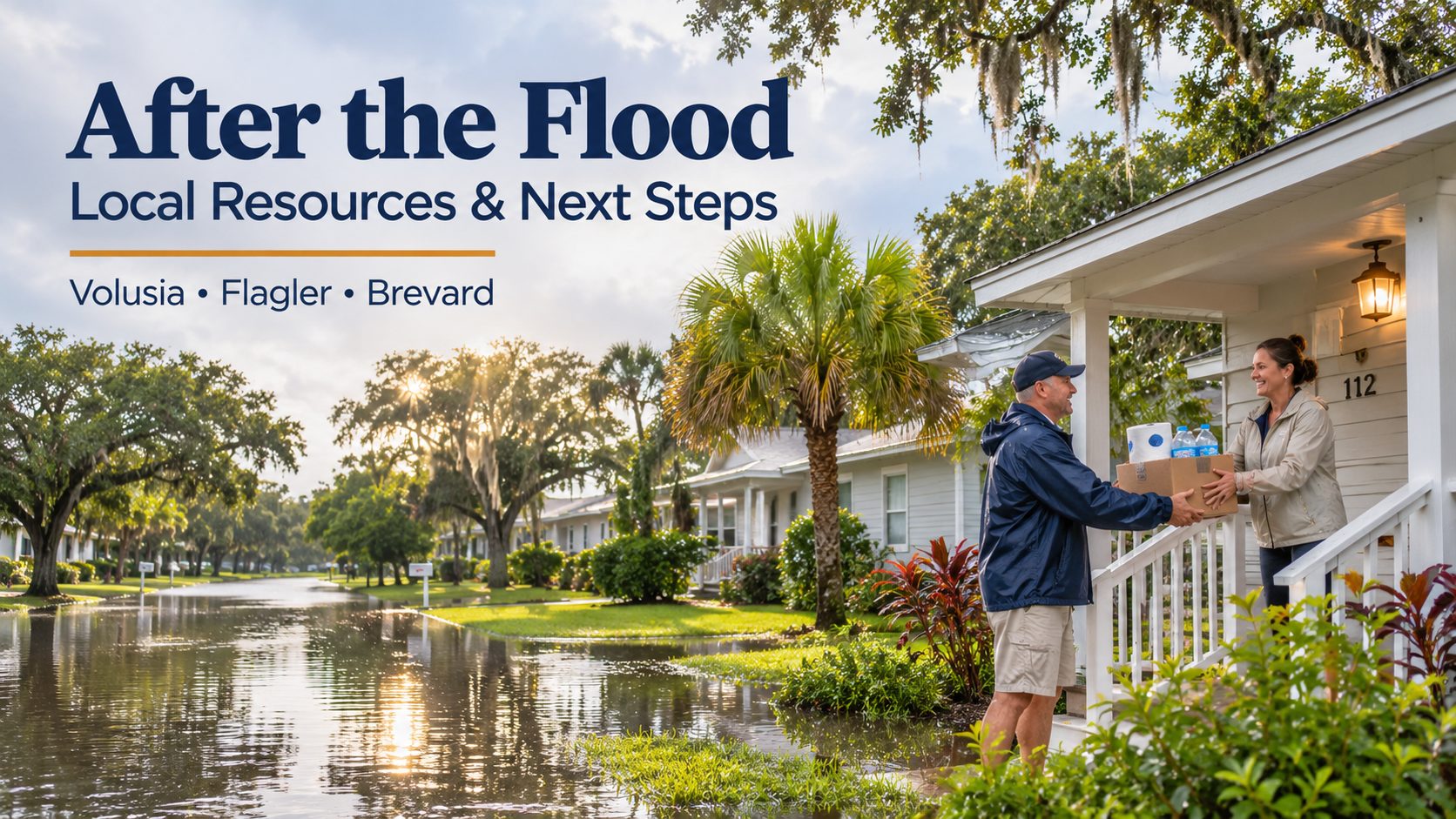
November 2026 Florida Flooding: Where to Get Help in Volusia, Flagler & Brevard Counties
By Ryan Tesnow | REALTOR® & Broker Associate, Coldwell Banker Premier | Updated November 20, 2026
It’s been a difficult few days for a lot of families across our community.
The rain has been relentless, streets have filled with water, and some neighbors are dealing with something much worse than an inconvenient drive home. They’re worried about water getting into their houses, their belongings, and what comes next.
Having grown up in New Smyrna Beach, I’ve seen our area go through some challenging weather over the years. But seeing familiar neighborhoods underwater and knowing people are struggling is never easy.
My heart goes out to everyone affected by this flooding, especially those facing damage to their homes or businesses.
I wanted to put together a helpful resource for our neighbors throughout Volusia, Flagler, and Brevard counties. Whether you need to check road conditions, report damage, begin an insurance claim, or help someone nearby, I hope this makes the next few days a little easier.
Please remember: Conditions are still changing as of Friday afternoon, November 20. Always check official updates before traveling or beginning cleanup.
What’s Happening With the November 2026 Flooding?
Several days of persistent, heavy rainfall have overwhelmed already saturated areas of East Central Florida.
Volusia County reported on November 19 that some locations had received 6 to 8 inches of rain over the previous 72 hours.
With the ground saturated, additional rainfall has had fewer places to drain, contributing to standing water, roadway closures, and flooding in low-lying neighborhoods.
New Smyrna Beach, Edgewater, Port Orange, Daytona Beach, and surrounding communities have all been affected by this weather event.
Brevard County has also experienced serious flooding, including concerns along the St. Johns River and impacts around Cocoa and other communities.
Flagler County has been included in the state’s expanded emergency declaration, and residents should continue monitoring local weather and flood alerts.
On Friday, Volusia County reported that the heaviest rain was expected to move out later in the afternoon.
But that doesn’t mean the flooding will disappear immediately.
In fact, rising rivers and standing water may remain concerns long after the rain stops.
Where to Find Road Closures and Emergency Updates
If you can avoid unnecessary travel while roads remain flooded, please do.
Roads that look passable may have deeper water, hidden hazards, or damage beneath the surface.
Even a familiar route can change quickly.
Here are the official resources I’d recommend saving to your phone.
Volusia County
Volusia County Emergency Management has created a central page with information about reported road closures, property damage reporting, sandbags, and emergency updates.
Website: https://www.volusia.gov/emergency
Citizens Information Center: 866-345-0345
The county also offers the Volusia Emergency Management app and AlertVolusia notifications.
The online road closure map is useful, but officials caution that it may not capture every closure immediately.
Brevard County
Brevard County Emergency Management is posting flood-related updates, closures, and emergency information.
Website: https://www.brevardfl.gov/EmergencyManagement
Residents should check the county’s emergency information before traveling to government offices or attempting to reach flooded neighborhoods.
Flagler County
Flagler County residents can find local emergency management information through the county’s official website.
Website: https://www.flaglercounty.gov/
You can also monitor National Weather Service alerts for Flagler Beach, Palm Coast, Bunnell, and surrounding areas.
For life-threatening emergencies in any county, call 911.
Please don’t drive through floodwater, even if you’ve driven that same road a thousand times.
What Should You Do if Water Entered Your Home?
First, make sure everyone is safe.
If floodwater is still rising, electrical equipment is exposed, or you suspect structural damage, stay out of the affected area until it’s safe to enter.
Once it’s safe, here are some important steps.
1. Document everything before cleanup
Take photographs and videos of the affected rooms, walls, flooring, furniture, appliances, and personal belongings.
If possible, photograph the waterline to help show how high the water reached.
Create a list of damaged items and keep receipts for emergency expenses, supplies, cleanup, and temporary repairs.
This documentation can be important when working with an insurance company or applying for assistance.
2. Contact your insurance company
If your home experienced flooding, contact your insurance agent or carrier promptly.
It’s important to understand that standard homeowners insurance generally does not cover damage caused by rising floodwater.
Flood insurance is usually a separate policy.
However, different types of water damage may be treated differently depending on the cause and policy language.
Let your insurance company determine coverage rather than assuming a loss is or isn’t covered.
3. Report the damage to your county
Volusia County is encouraging residents and business owners who experienced water entering their buildings to complete its official damage reporting process.
That helps emergency officials understand the extent of the event.
You can find the reporting link at:
https://www.volusia.gov/emergency
If you live in Brevard or Flagler County, check your county’s emergency management resources for current damage reporting instructions.
Reporting damage to the county is not the same as filing an insurance claim, so do both when appropriate.
4. Begin drying your home when it’s safe
Standing water and trapped moisture can create additional problems.
The Centers for Disease Control and Prevention recommends cleaning and drying wet areas as quickly as possible, ideally within 24 to 48 hours when conditions allow.
Certain materials exposed to contaminated floodwater may need to be discarded if they cannot be cleaned and dried properly.
Be cautious around electrical outlets, appliances, and damaged wiring.
If the flooding is significant, consider contacting a qualified water restoration company.
And please avoid running generators, gasoline-powered pumps, or other fuel-burning equipment inside or near enclosed areas because of carbon monoxide risks.
What About Mold After Flooding?
Florida’s humidity can make moisture problems particularly challenging.
Water can become trapped behind baseboards, underneath flooring, inside walls, and in insulation.
Even after a room looks dry, moisture may remain.
That’s why it’s important to dry affected areas thoroughly and address contaminated materials.
The CDC recommends protective equipment during mold cleanup and extra precautions for anyone with respiratory conditions or a weakened immune system.
If water reached your drywall, cabinets, flooring, or HVAC equipment, consider having the property evaluated by a qualified professional.
And if you’re hiring a contractor, verify licensing when required, request written estimates, and be cautious about anyone demanding large upfront payments without clear documentation.
Unfortunately, major weather events can attract people looking to take advantage of homeowners who are already dealing with enough.
Does a State of Emergency Mean FEMA Money Is Available?
Not automatically.
Florida’s governor expanded the state’s emergency declaration to include affected counties, including Volusia, Flagler, and Brevard.
A state emergency declaration helps government agencies coordinate resources and emergency response.
But it is different from a federal major disaster declaration authorizing FEMA Individual Assistance for affected residents.
Don’t assume that FEMA grants are available simply because a state of emergency has been declared.
Check official announcements and eligibility requirements through:
https://www.fema.gov/disasterassistance
You can also contact your county emergency management office for information on available local services.
If you’re having difficulty meeting immediate basic needs, dialing 211 can help connect you with participating community assistance resources in your area.
What About Flood Insurance if You’re Outside a Flood Zone?
This is something I think more Florida homeowners should understand.
People often say their house isn’t in a flood zone.
But every property has some level of flood risk.
The real distinction is whether the home is located in a designated higher-risk flood area.
Flooding can happen outside those areas, especially after prolonged heavy rainfall, overwhelmed drainage systems, or rising rivers.
You can check FEMA flood hazard mapping at:
https://msc.fema.gov/portal/home
Keep in mind that flood maps are only one part of understanding a property’s risk.
Past drainage issues, elevation, surrounding development, and nearby waterways also matter.
If you’re unsure whether you have flood insurance, contact your insurance agent and review your policy.
Flood coverage commonly has waiting periods and should be considered before the next storm.
What if You’re Buying or Selling a Home After the Flood?
If you’re currently under contract on a home in Volusia, Flagler, or Brevard County, I encourage you to communicate with your Realtor, lender, insurance company, and title company.
Flooding can affect inspections, property condition, insurance availability, appraisals, and scheduled closings.
If you’re a buyer, you may want to confirm the property’s current condition and whether any new water intrusion has occurred.
If you’re a seller, disclose known material facts as required by Florida law and your contractual obligations.
A state of emergency does not automatically cancel every real estate contract.
Florida contracts may contain specific provisions addressing force majeure, casualty damage, or closing delays, but their application depends on the actual agreement and circumstances.
Before making a contractual decision, review the documents with the appropriate real estate and legal professionals.
Most importantly, don’t rush a decision before knowing whether the property is safe and what damage, if any, occurred.
How Can We Help Our Neighbors?
One thing I’ve always appreciated about New Smyrna Beach and the surrounding communities is how people show up for one another.
You see it after hurricanes, during difficult times, and even in the small everyday things that make this area feel like home.
If you’re fortunate enough to have stayed dry, consider checking on a neighbor who lives alone, helping someone move belongings to a safer location, or donating supplies through a reputable local organization.
If you own a business, consider whether there’s something you can offer to people who are struggling.
And if you’re someone who needs help, please don’t hesitate to ask.
There are people in our community who care and want to help.
Frequently Asked Questions About the November 2026 Flooding
Where can I check road closures in Volusia County?
Visit https://www.volusia.gov/emergency for the county’s road closure information and other emergency updates. Conditions can change faster than the map updates.
How do I report water entering my house in New Smyrna Beach?
Volusia County has an online damage reporting process available through its emergency management page. Also notify your insurance company if you suffered damage.
Does homeowners insurance cover flood damage in Florida?
Standard homeowners policies generally exclude rising floodwater. Separate flood insurance may provide coverage, subject to policy terms and limits.
How quickly can mold develop after flooding?
The CDC advises drying wet areas and materials within 24 to 48 hours where safely possible to reduce the risk of mold.
Is the flooding over when the rain stops?
Not necessarily. Standing water and rising river levels can continue affecting roads and properties after rainfall decreases.
Are FEMA grants available for the November 2026 Florida floods?
A state emergency declaration does not automatically activate FEMA Individual Assistance. Check FEMA and official state announcements for current eligibility.
A Message to Our Community
I know this isn’t the kind of November any of us were hoping for.
For families dealing with water damage, disrupted routines, or uncertainty about what comes next, I hope you know there are people thinking about you and willing to help.
I’ve called New Smyrna Beach home my whole life, and I care deeply about the people who make this community what it is.
If you’re looking for a local contractor, inspector, insurance contact, or simply trying to figure out who to call about a property issue, please feel free to reach out.
Even if it has absolutely nothing to do with buying or selling a home.
I’m always happy to help connect someone with a local resource when I can.
Please stay safe, check on one another, and remember that our community is at its best when we look out for each other.
Ryan Tesnow
REALTOR® | Broker Associate
Coldwell Banker Premier
Call or Text: 254-206-5020
Email: RyanTesnow@PremierMove.com
Website: https://realestate-withryan.com/
Praying for everyone affected across Volusia, Flagler, and Brevard counties.
Information current as of November 20, 2026. Conditions, services, assistance programs, and road closures may change. Always follow official emergency instructions.
Official Sources
- Volusia County Emergency Management: https://www.volusia.gov/emergency
- Brevard County Emergency Management: https://www.brevardfl.gov/EmergencyManagement
- Flagler County: https://www.flaglercounty.gov/
- National Weather Service Melbourne: https://www.weather.gov/mlb/
- National Flood Insurance Program: https://www.floodsmart.gov/
- CDC Flood Cleanup Guidance: https://www.cdc.gov/natural-disasters/safety/index.html
- FEMA Disaster Assistance: https://www.fema.gov/disasterassistance